


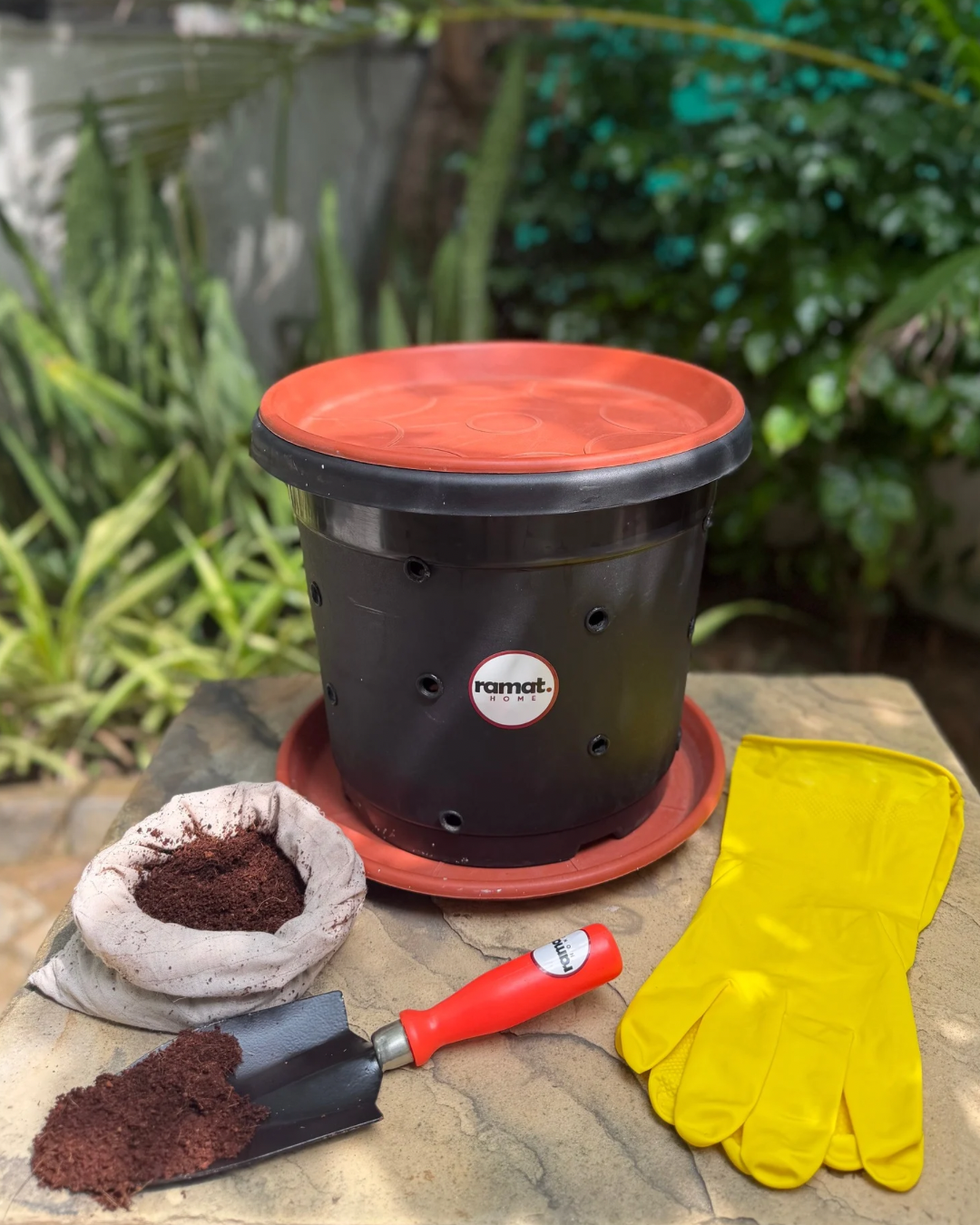

Description
How to Use
- Set up your kit. Place the tray down, then place the bin on top of it. The tray will collect any excess liquid that drains out during composting.
- Line the bin with newspaper. Add a layer of newspaper along the base and sides — this helps absorb excess moisture, which is especially important since plastic doesn’t breathe the way natural materials do.
- Add your first dry layer. Use the coco peat provided, or dried leaves, soil, or sand.
- Add your wet waste. Add your kitchen scraps — vegetable peels, fruit waste, tea leaves. Wear your gloves while handling waste for a cleaner, easier experience.
- Add another dry layer on top. Cover the wet waste with soil, dried leaves, or garden scraps.
- Cover with newspaper again. This keeps absorbing moisture and helps control odour.
- Close the lid. Use the trowel to mix every few days, and repeat the layering each time you add
fresh waste.
In 30–45 days, you’ll have dark, crumbly, ready-to-use compost for your plants.
Care Instructions
- Keep the bin in a shaded, well-ventilated spot — direct, harsh sun can affect the plastic over time.
- Empty and rinse the base tray regularly to avoid any liquid buildup or odour.
- Wipe the bin exterior with a damp cloth as needed — no harsh chemical cleaners required. Store your gloves and trowel in a dry spot near the bin so they’re always within reach.
Tips for Beginners
- Balance is everything. If your compost smells bad or looks too wet, add more dry material (leaves,coco peat) and mix. If it looks too dry, add a little water or fresh kitchen scraps.
- Don’t add oil, dairy, or meat — these slow down composting and attract pests.
- Chop larger scraps into smaller pieces before adding them — they break down faster.
- Mix every few days. It brings in air and keeps the process moving smoothly.
- Use your gloves. They make handling both waste and finished compost far more comfortable, especially for first-timers.




Reviews
There are no reviews yet.